
Ashley Harder on Equality and Inclusion with Equality Arizona
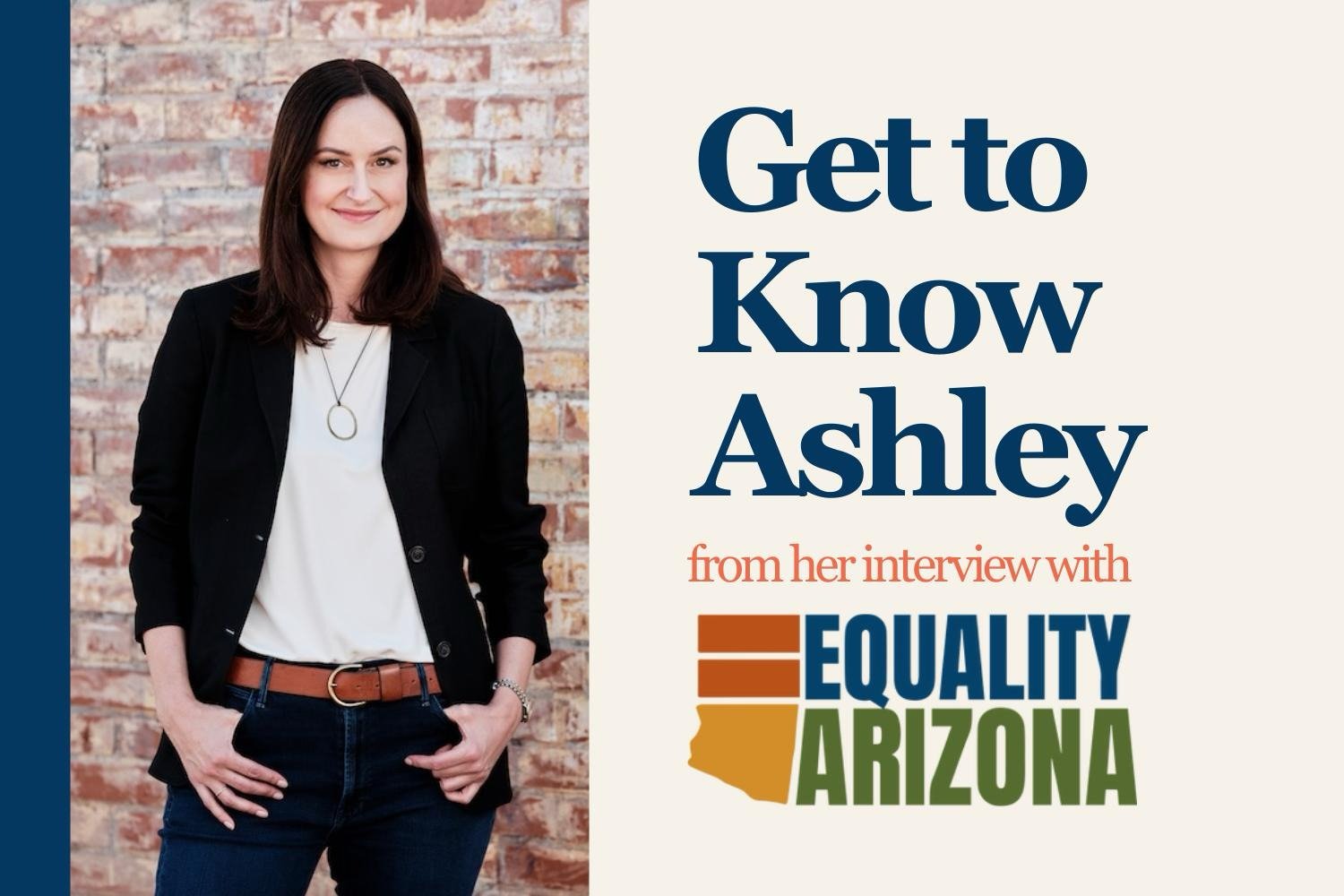
Inclusion isn’t just something we celebrate during Pride Month. It’s a commitment we make every day of the year.
– Ashley Harder
This Pride Month feels different. Across the country, LGBTQIA+ organizations and community spaces are under growing political and economic pressure. These groups do far more than host events—they provide vital mentorship, advocacy, healthcare, and youth programs.
Although Phoenix has made great strides, as our city grows, our commitment must grow with it.
As District 4’s next Councilwoman, I will ensure Phoenix remains a safe, welcoming, and inclusive city for everyone. I will continue to fight to invest responsibly in the organizations that serve our LGBTQIA+ community and guarantee that community voices have a seat at the table as our city expands.
I also promise to protect our symbols of inclusion by making the maintenance of our rainbow crosswalks a permanent city responsibility.
A welcoming city doesn’t happen by accident. It takes leadership that shows up, listens, and invests in its people. At a time when other cities are stepping back, Phoenix must step forward.
Inclusion isn’t just something we celebrate during Pride Month—it’s a commitment we must live every single day.
Equality Arizona Q & A with Ashley Harder
Equality Arizona recently asked how that commitment guides my work in creating welcoming spaces and supporting other LGBTQIA+ business owners as they open their doors and build successful businesses. Below are my responses.
Introduce yourself and tell us why you are running for Phoenix City Council, District 4.
I’ve called Phoenix home for more than 25 years, and I’ve spent much of that time in the trenches of District 4 as a small business owner, developer, and community advocate. A lot of my advocacy really came from what I call “accidental advocacy.”
Through my work, I kept running into issues that residents, neighborhoods, and small businesses were already asking to see addressed, whether it was challenges navigating city processes, gaps in neighborhood investment, infrastructure concerns, or the pressure that growth was putting on communities. Over time, that naturally pushed me into getting involved, showing up to meetings, organizing around issues, and helping advocate for the changes communities were calling for.
How will you ensure that the voices of LGBTQ+ residents and other marginalized communities are heard and included in city decision-making?
A bedrock of my approach to neighborhood development has always been bringing people together early and getting feedback from the people most impacted by the work.
When trusted partners are included early, they can help strengthen policies and become ambassadors for a shared mission instead of feeling shut out of the process. Policies cannot be developed in isolation from those most impacted by them.
One of the best ways we include community voices in city decision making is through boards, commissions, and stakeholder engagement. Phoenix has had successes, but we also know the gaps by how early people are brought into important conversations.
Whether it’s a development project, neighborhood issue, or public policy discussion, outcomes are always stronger when people feel included from the beginning instead of hearing about decisions after they’ve already been made.
Inclusivity is ongoing work. A lot of my advocacy has honestly come down to picking up the phone, listening, asking questions, and bringing people into the conversation. It takes outreach, relationship building, and making sure people feel safe being honest about their experiences and concerns.
I strongly support Phoenix’s non-discrimination protections and believe City Hall should continue to be a place where people feel respected, represented, and welcome.
How have you been involved in the LGBTQ+ community in the past as a leader, with a local organization, or in advocacy.
I’ve always believed representation should be active, visible, and backed up by real involvement in making our city a better place for everyone. Part of why I built my own business was to create a life where I could step into leadership, support important community initiatives, and have the flexibility to show up for causes and communities that matter to me.
Over the years I’ve also supported organizations and spaces in Phoenix like one•n•ten, Aunt Rita’s, Southwest Center for HIV (now Prisma), One Community, and community spaces like Cash Country Inn and Bliss ReBar. Honestly, I miss The Cash. Spaces like that mattered because they created community, belonging, and connection for so many people over the years.
My leadership and advocacy in the LGBTQ+ community honestly started really early, back in the 90s, when I helped start my private high school’s first Gay and Lesbian Alliance student group. After the holiday break I was asked not to return.
That experience is a big part of why I fight for LGBTQ+ youth to have protections, mentorship, opportunity, and spaces where they feel safe and supported.
Every year we see an onslaught of hateful bills targeting LGBTQ+ people, especially trans youth. Once I learned how to use the Arizona Legislature’s Request to Speak (RTS) system, I actively opposed many of those bills.
To me, representation is active work. It means showing up consistently, listening carefully, and making sure people know their voices matter. Inclusion isn’t just something we celebrate during Pride Month—it’s a commitment we must live every single day.
